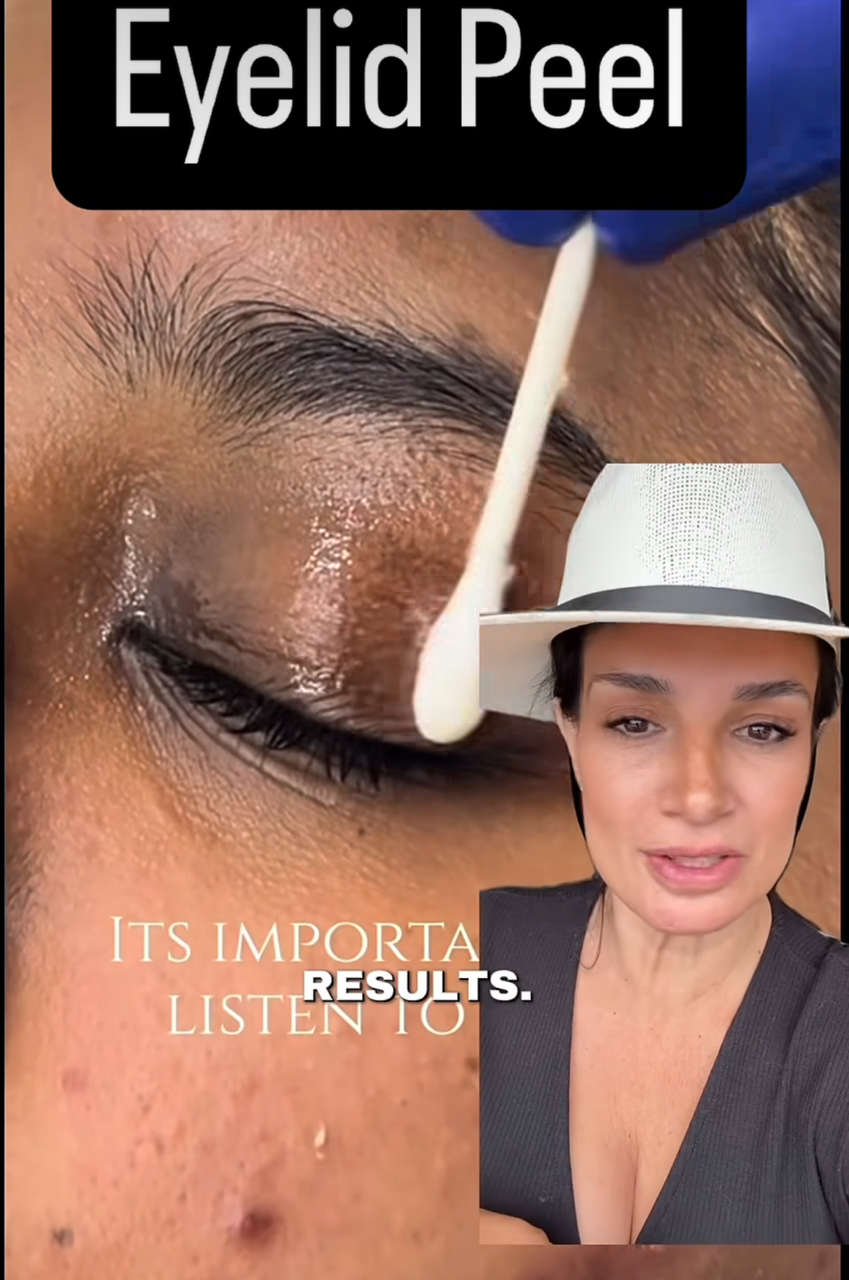
Eyelid Peels Are a Thing for Saggy and Pigmented Eyelids

Many people invest significant time and money caring for their face, but forget about one of the biggest giveaways of age:
Their hands.
Even when the face looks youthful, sun damage, pigmentation, and texture changes on the hands can reveal years of accumulated aging.
One of the most common questions I hear is:
Can a chemical peel make your hands look younger?
The answer is yes. Chemical peels are commonly used to improve the appearance of aging hands and sun damaged skin.
Why Do Hands Show Age So Easily?
The hands are exposed to the environment every day.
Over time, repeated sun exposure can contribute to:
Brown spots
Uneven pigmentation
Rough texture
Dull skin
Fine lines
Visible signs of aging
Many people apply sunscreen to their face while forgetting their hands entirely.
Can Chemical Peels Help Aging Hands?
Chemical peels promote skin renewal by encouraging damaged skin cells to shed.
Many individuals notice improvements in:
Skin brightness
Texture
Sun damage
Hyperpigmentation
Brown spots
Overall skin appearance
While chemical peels cannot restore lost volume, they may help improve the quality and appearance of the skin.
What Causes Brown Spots on the Hands?
Brown spots often develop from years of cumulative sun exposure.
These spots are commonly referred to as:
Sun spots
Age spots
Liver spots
Although harmless in many cases, they can make the hands appear older than the face.
Can Chemical Peels Help Hand Pigmentation?
Many individuals seek chemical peels specifically to improve:
Hyperpigmentation
Brown spots
Uneven skin tone
Sun damage
The goal is often brighter, more even looking skin.
Results vary depending on the depth and severity of the pigmentation.
What I’ve Seen After 15+ Years of Performing Chemical Peels
After performing chemical peels for more than 15 years, I’ve found that many people are surprised by how much younger their hands appear when pigmentation and texture improve.
Often, clients focus exclusively on facial rejuvenation and don’t realize how much sun damage has accumulated on their hands.
Some of the most satisfying transformations I’ve seen occur when facial treatments are combined with treatments for the neck, chest, and hands.
The overall result tends to look more natural and balanced.
Our Layered Chemical Peel Approach
At The Peel Connection, we utilize a layered protocol combining a Modified Jessner Peel with a 15% TCA Peel.
Rather than relying on a single aggressive treatment, layers are applied progressively to customize treatment depth while maintaining a strong focus on safety.
This approach may help improve:
Hand pigmentation
Brown spots
Sun damage
Uneven texture
Hyperpigmentation
Overall skin appearance
while allowing treatment plans to be customized for the individual.
How Can You Protect Your Hands?
One of the simplest ways to support healthy looking skin is daily protection.
I encourage clients to:
Apply sunscreen to the hands daily
Reapply after washing
Wear protective gloves when appropriate
Maintain a consistent skincare routine
Prevention remains one of the most effective anti aging strategies available.
Final Thoughts
If you’re concerned about brown spots, sun damage, or aging skin on your hands, chemical peels may help improve the overall appearance and quality of the skin.
When combined with proper sun protection and skincare, chemical peels can help hands appear brighter, smoother, and more youthful.
About the Author
Nidah Barber is the founder and CEO of The Peel Connection in Beverly Hills, California. With more than 15 years of experience performing chemical peels, she specializes in hyperpigmentation, melasma, acne scars, and layered chemical peel protocols utilizing Modified Jessner and TCA peels. She has been featured in Forbes and has helped thousands of clients improve the appearance of their skin through customized chemical peel treatments.
When people think about anti aging treatments, they often focus entirely on the face.
However, one of the first places to reveal a person’s age is often the chest.
Years of sun exposure can leave behind wrinkles, pigmentation, uneven skin tone, and a crepey appearance that many people find difficult to improve with skincare alone.
One of the most common questions I hear is:
Can a chemical peel improve chest wrinkles and sun damage?
The answer is yes. Chemical peels are commonly used to improve the appearance of aging skin on the chest and décolletage.
What Is the Décolletage?
The décolletage refers to the upper chest area extending below the neck.
Because this area receives significant sun exposure throughout life, it often develops signs of aging earlier than expected.
Common concerns include:
Sun damage
Brown spots
Fine lines
Wrinkles
Crepey skin
Uneven pigmentation
Rough texture
Why Does the Chest Age So Quickly?
Many people apply sunscreen and skincare products to their face while neglecting the chest.
Over time, cumulative UV exposure can contribute to:
Collagen breakdown
Pigmentation changes
Loss of elasticity
Premature aging
The chest often reflects decades of sun exposure.
Can Chemical Peels Help Chest Wrinkles?
Chemical peels promote skin renewal by encouraging older, damaged skin cells to shed.
Many individuals notice improvements in:
Texture
Brightness
Skin tone
Fine lines
Sun damage
Overall skin appearance
While chemical peels are not a substitute for surgery, they may help improve the overall appearance and quality of aging skin.
Can Chemical Peels Help Brown Spots on the Chest?
Brown spots and uneven pigmentation are among the most common concerns affecting the chest area.
Chemical peels may help improve:
Sun spots
Hyperpigmentation
Uneven skin tone
Age related discoloration
Overall skin radiance
The degree of improvement depends on the depth of the pigmentation and individual skin characteristics.
What I’ve Seen After 15+ Years of Performing Chemical Peels
After performing chemical peels for more than 15 years, I’ve found that many clients focus entirely on their face while overlooking their neck and chest.
The reality is that beautiful skin is about balance.
Some of the most impressive rejuvenation results occur when the face, neck, and chest are treated together rather than as separate areas.
When the skin tone and texture become more consistent across all three areas, the overall result often appears more natural and youthful.
Our Layered Chemical Peel Approach
At The Peel Connection, we utilize a layered protocol combining a Modified Jessner Peel with a 15% TCA Peel.
Rather than relying on a single aggressive treatment, layers are applied progressively to customize treatment depth while maintaining a strong focus on safety.
This approach may help improve:
Chest wrinkles
Sun damage
Hyperpigmentation
Brown spots
Uneven texture
Crepey skin
while allowing treatment plans to be tailored to the individual.
How Can You Protect Your Results?
Maintaining healthy looking skin requires ongoing care.
I encourage clients to:
Wear sunscreen daily
Extend skincare products to the chest area
Wear protective clothing when appropriate
Maintain a consistent skincare routine
Prevention remains one of the most effective anti aging strategies available.
Final Thoughts
If you’re concerned about chest wrinkles, sun damage, brown spots, or crepey skin, chemical peels may help improve the overall appearance and quality of the skin.
Improving the chest along with the face and neck can create a more balanced, refreshed, and youthful appearance.
About the Author
Nidah Barber is the founder and CEO of The Peel Connection in Beverly Hills, California. With more than 15 years of experience performing chemical peels, she specializes in hyperpigmentation, melasma, acne scars, and layered chemical peel protocols utilizing Modified Jessner and TCA peels. She has been featured in Forbes and has helped thousands of clients improve the appearance of their skin through customized chemical peel treatments.
When people think about aging, they often focus on the face.
However, one of the first places that can reveal a person’s age is the neck.
One of the most common questions I hear is:
Can you perform a chemical peel on the neck?
The answer is yes.
When performed appropriately, chemical peels may be used on the neck to help improve the appearance of aging skin, sun damage, discoloration, and texture concerns.
Why Does the Neck Age So Quickly?
The skin on the neck is different from the skin on many other areas of the body.
It is often thinner and may show signs of aging sooner.
Common neck concerns include:
Fine lines
Wrinkles
Crepey skin
Sun damage
Uneven pigmentation
Loss of smooth texture
Years of cumulative sun exposure can accelerate these changes.
Can Chemical Peels Help Neck Wrinkles?
Chemical peels promote skin renewal by encouraging older, damaged skin cells to shed.
Many individuals notice improvements in:
Skin texture
Brightness
Tone
Fine lines
Sun damage
Overall skin appearance
While chemical peels do not replace surgical procedures, they may help improve the overall appearance of aging neck skin.
What Causes Neck Wrinkles?
Several factors contribute to neck aging, including:
Natural aging
Sun exposure
Collagen loss
Repetitive movement
Genetics
Lifestyle factors
Today’s increased use of phones and devices has also led many people to become more aware of horizontal neck lines.
What I’ve Seen After 15+ Years of Performing Chemical Peels
After performing chemical peels for more than 15 years, I’ve noticed that many clients invest heavily in treating their face while completely neglecting their neck.
The challenge is that improving the face while ignoring the neck can sometimes create a noticeable contrast.
Some of the most natural looking results occur when both areas are treated as part of an overall skin rejuvenation plan.
Healthy looking skin should flow seamlessly from the face to the neck.
Can Chemical Peels Help Neck Discoloration?
Many people seek treatment not only for wrinkles but also for pigmentation concerns.
Chemical peels may help improve:
Sun damage
Uneven skin tone
Hyperpigmentation
Brown spots
Overall skin radiance
This is one reason neck treatments remain popular among individuals looking for overall skin rejuvenation.
Our Layered Chemical Peel Approach
At The Peel Connection, we utilize a layered protocol combining a Modified Jessner Peel with a 15% TCA Peel.
Rather than relying on a single aggressive treatment, layers are applied progressively to customize treatment depth while maintaining a strong focus on safety.
This approach may help improve:
Neck wrinkles
Crepey skin
Hyperpigmentation
Sun damage
Uneven texture
Overall skin quality
while allowing treatment plans to be customized for the individual.
How Can You Protect Your Neck?
Many people forget that sunscreen should extend beyond the face.
To help support healthier looking skin, I encourage clients to:
Apply sunscreen to the neck daily
Extend skincare products to the neck area
Wear sun protective clothing when appropriate
Maintain a consistent skincare routine
Prevention remains one of the most effective anti aging tools available.
Final Thoughts
If you’re concerned about neck wrinkles, crepey skin, or sun damage, chemical peels may help improve the overall appearance and quality of the skin.
While no treatment can stop the aging process entirely, improving skin tone, texture, and radiance can help the neck appear smoother, healthier, and more youthful.
About the Author
Nidah Barber is the founder and CEO of The Peel Connection in Beverly Hills, California. With more than 15 years of experience performing chemical peels, she specializes in hyperpigmentation, melasma, acne scars, and layered chemical peel protocols utilizing Modified Jessner and TCA peels. She has been featured in Forbes and has helped thousands of clients improve the appearance of their skin through customized chemical peel treatments.
One of the most common concerns I hear from clients over 40 is:
“My skin looks crepey. Can a chemical peel help?”
Crepey skin is different from wrinkles.
Instead of deep lines, crepey skin often appears thin, fragile, loose, and finely wrinkled, almost like tissue paper.
While no treatment can completely stop the aging process, chemical peels may help improve the overall appearance and quality of crepey skin.
What Is Crepey Skin?
Crepey skin refers to skin that has lost some of its firmness, elasticity, and smooth texture.
It often appears:
Thin
Dry
Wrinkled
Loose
Less resilient
Common treatment areas include:
Under the eyes
Around the mouth
Neck
Chest
Arms
Hands
What Causes Crepey Skin?
Several factors contribute to crepey skin, including:
Aging
Sun exposure
Collagen loss
Dehydration
Environmental damage
Genetics
For many people, years of accumulated sun exposure play a significant role.
Can Chemical Peels Help Crepey Skin?
Chemical peels help accelerate skin renewal and improve the overall appearance of the skin.
Many individuals notice improvements in:
Skin texture
Brightness
Smoothness
Tone
Radiance
While chemical peels are not a surgical procedure and will not tighten loose skin like a facelift, they may help improve the appearance of aging skin and create a fresher look.
Why Skin Texture Matters
When clients describe their skin as looking older, they are often noticing changes in texture rather than a single wrinkle.
Improving texture can make a significant difference in how youthful the skin appears.
This is one reason chemical peels remain a popular option for skin rejuvenation.
What I’ve Seen After 15+ Years of Performing Chemical Peels
After performing chemical peels for more than 15 years, I’ve found that many clients become focused on individual wrinkles.
In reality, what often creates a more youthful appearance is improving the overall quality of the skin.
When skin becomes brighter, smoother, and more even in tone, it often looks healthier and younger as a whole.
Some of the most dramatic improvements I’ve seen involve clients who simply wanted their skin to look refreshed again.
The goal is not perfection. The goal is healthier looking skin.
Why We Use a Layered Approach
At The Peel Connection, we utilize a layered protocol combining a Modified Jessner Peel with a 15% TCA Peel.
Rather than relying on a single aggressive treatment, layers are applied progressively to customize treatment depth while maintaining a strong focus on safety.
This approach may help improve:
Crepey skin appearance
Sun damage
Hyperpigmentation
Uneven texture
Fine lines
Overall skin quality
while allowing treatment plans to be customized for the individual.
Can You Prevent Crepey Skin?
While aging is inevitable, there are steps that may help support healthier skin:
Daily sunscreen use
Consistent skincare
Proper hydration
Professional skin treatments
Avoiding excessive sun exposure
Prevention and maintenance often work hand in hand.
Final Thoughts
If you’re concerned about crepey skin, chemical peels may help improve the overall appearance, texture, and quality of your skin.
While no peel can completely reverse aging, improving skin tone, smoothness, and radiance can create a fresher and more youthful appearance.
About the Author
Nidah Barber is the founder and CEO of The Peel Connection in Beverly Hills, California. With more than 15 years of experience performing chemical peels, she specializes in hyperpigmentation, melasma, acne scars, and layered chemical peel protocols utilizing Modified Jessner and TCA peels. She has been featured in Forbes and has helped thousands of clients improve the appearance of their skin through customized chemical peel treatments.
When most people think about chemical peels, they think about peeling skin.
What many people don’t realize is that chemical peels have been used for decades to improve the appearance of aging skin.
One of the most common questions I hear is:
Can chemical peels help fine lines and wrinkles?
The answer is yes.
Chemical peels can be an effective option for improving skin texture, brightness, and many visible signs of aging.
What Causes Fine Lines and Wrinkles?
Fine lines and wrinkles develop from a combination of factors, including:
Natural aging
Sun exposure
Collagen loss
Repetitive facial expressions
Environmental damage
Lifestyle factors
Over time, the skin’s ability to renew itself slows, which can contribute to a less youthful appearance.
How Can Chemical Peels Help Aging Skin?
Chemical peels promote skin renewal by encouraging older, damaged skin cells to shed.
As the skin renews itself, many individuals notice:
Smoother skin texture
Brighter complexion
More even skin tone
Improved skin radiance
Softer appearance of fine lines
Healthier looking skin
The goal is not to completely eliminate every wrinkle but to improve the overall quality and appearance of the skin.
Can Chemical Peels Help Sun Damage?
Absolutely.
Much of what people perceive as aging is actually the result of years of sun exposure.
Chemical peels are commonly used to improve:
Sun damage
Dark spots
Uneven pigmentation
Rough texture
Dull skin
Many clients notice that improving sun damage alone can make the skin appear significantly younger.
What I’ve Seen After 15+ Years of Performing Chemical Peels
After performing chemical peels for more than 15 years, I’ve found that many people focus exclusively on wrinkles when evaluating their appearance.
What often makes the biggest difference is not a single line or wrinkle.
It’s the overall quality of the skin.
When skin becomes brighter, smoother, more even in tone, and healthier looking, people frequently appear younger without anyone being able to pinpoint exactly why.
Some of the most satisfying transformations I’ve seen involve improving the overall condition of the skin rather than chasing one specific wrinkle.
Why We Use a Layered Approach
At The Peel Connection, we utilize a layered protocol combining a Modified Jessner Peel with a 15% TCA Peel.
Rather than relying on a single aggressive treatment, layers are applied progressively to customize treatment depth while maintaining a strong focus on safety.
This approach may help improve:
Fine lines
Sun damage
Hyperpigmentation
Uneven skin tone
Acne marks
Skin texture
while allowing treatment plans to be customized for the individual.
What About Preventative Aging?
Many people begin chemical peel treatments before significant aging occurs.
Maintaining healthy skin over time is often easier than trying to reverse years of accumulated damage.
Consistent skincare, sun protection, and professional treatments can all contribute to healthier looking skin as the years go by.
Final Thoughts
Chemical peels can be an excellent option for individuals looking to improve the appearance of fine lines, wrinkles, sun damage, and overall skin quality.
While no treatment stops the aging process, improving skin tone, texture, and radiance can create a fresher, healthier, and more youthful appearance.
Want to discuss light vs medium-depth peels for fine lines? Book your chemical peel in Beverly Hills.
About the Author
Nidah Barber is the founder and CEO of The Peel Connection in Beverly Hills, California. With more than 15 years of experience performing chemical peels, she specializes in hyperpigmentation, melasma, acne scars, and layered chemical peel protocols utilizing Modified Jessner and TCA peels. She has been featured in Forbes and has helped thousands of clients improve the appearance of their skin through customized chemical peel treatments.
Large pores are one of the most common skincare concerns I hear about in my practice.
Many people feel that their pores make their skin appear rough, uneven, or older than it actually is.
One of the most common questions I receive is:
Can a chemical peel make pores look smaller?
The answer is yes, chemical peels may help improve the appearance of enlarged pores and create smoother looking skin.
Why Do Pores Look Large?
Pores do not actually open and close, despite what many people have heard.
However, several factors can make pores appear larger, including:
Excess oil production
Sun damage
Loss of skin elasticity
Aging
Genetics
Dead skin buildup
Previous acne
Many people notice enlarged pores most prominently on the:
Nose
Cheeks
Forehead
Chin
How Can Chemical Peels Help Enlarged Pores?
Chemical peels help accelerate skin cell turnover and remove excess buildup from the skin’s surface.
As the skin renews itself, many people notice:
Smoother texture
Brighter skin
More even skin tone
Less congestion
Improved appearance of pores
While chemical peels cannot permanently change the actual size of pores, they may help pores appear smaller and less noticeable.
Why Texture Matters
When skin becomes rough or congested, pores often appear larger.
Improving overall skin texture can make a significant difference in how pores look.
This is one reason chemical peels remain popular for individuals seeking smoother skin.
What I’ve Seen After 15+ Years of Performing Chemical Peels
After performing chemical peels for more than 15 years, I’ve found that many clients come in focused on their pores when the real issue is often a combination of texture, oil production, and sun damage.
Once we begin improving overall skin quality, clients frequently notice that their pores appear smaller even though we are not directly changing the pores themselves.
Some of the most dramatic improvements I’ve seen occur when we focus on improving the skin as a whole rather than chasing a single concern.
Healthy looking skin tends to make everything look better.
Can Chemical Peels Help Oily Skin?
Many individuals with enlarged pores also struggle with excess oil production.
Chemical peels may help improve:
Congestion
Excess oil
Rough texture
Dull skin
Uneven tone
Creating a healthier looking complexion overall.
Our Layered Chemical Peel Approach
At The Peel Connection, we utilize a layered protocol combining a Modified Jessner Peel with a 15% TCA Peel.
Rather than relying on a single aggressive treatment, layers are applied progressively to customize treatment depth while maintaining a strong focus on safety.
This approach may help improve:
Enlarged pores
Hyperpigmentation
Melasma
Acne marks
Sun damage
Uneven texture
Fine lines
while allowing treatment plans to be tailored to the individual.
How Can You Maintain Results?
To support healthy looking skin, I typically recommend:
Daily sunscreen use
Consistent skincare
Proper cleansing
Avoiding excessive picking
Professional skin treatments when appropriate
Consistency often produces the best long term improvements.
Final Thoughts
If enlarged pores are one of your biggest skincare concerns, chemical peels may help improve the overall appearance of your skin while creating a smoother, more refined looking complexion.
While pores cannot be permanently shrunk, improving skin texture, congestion, and overall skin quality can make them appear significantly less noticeable.
About the Author
Nidah Barber is the founder and CEO of The Peel Connection in Beverly Hills, California. With more than 15 years of experience performing chemical peels, she specializes in hyperpigmentation, melasma, acne scars, and layered chemical peel protocols utilizing Modified Jessner and TCA peels. She has been featured in Forbes and has helped thousands of clients improve the appearance of their skin through customized chemical peel treatments.
One of the most common questions I hear is:
How often should you get a chemical peel?
The answer depends on your skin concerns, treatment goals, skin type, and the type of peel being performed.
There is no one schedule that works for everyone.
Why People Get Chemical Peels
Chemical peels are commonly performed to improve:
Hyperpigmentation
Melasma
Acne marks
Sun damage
Uneven skin tone
Fine lines
Skin texture
Overall skin radiance
The frequency of treatment often depends on which concern is being addressed.
Can You Get Chemical Peels Too Often?
More is not always better.
The goal is to allow the skin adequate time to complete its renewal process before undergoing another treatment.
Healthy skin improvement is often built through consistency rather than excessive treatment.
Factors That Determine Treatment Frequency
Several factors influence how often someone may choose to receive a chemical peel:
Skin Type
Different skin types respond differently to treatment.
Treatment Goals
Someone treating melasma may have different needs than someone focusing on acne marks or sun damage.
Peel Strength
Different chemical peels are designed for different purposes and treatment schedules.
Skin Response
Every individual’s skin heals and responds differently.
What I’ve Seen After 15+ Years of Performing Chemical Peels
After performing chemical peels for more than 15 years, I’ve noticed that many clients become focused on getting results as quickly as possible.
What I often explain is that some of the best skin transformations happen when treatments are spaced appropriately and performed consistently over time.
The clients who usually achieve the most impressive long term improvements are not necessarily the ones receiving the most aggressive treatments. They are the ones who remain consistent with their skincare, sun protection, and treatment plan.
Healthy skin is often the result of small improvements repeated over time.
Why Consistency Matters
Conditions such as:
Hyperpigmentation
Melasma
Sun damage
Acne marks
typically develop over years.
For that reason, improvement is often a process rather than a single event.
Many individuals benefit from viewing chemical peels as part of an overall skin maintenance strategy.
Our Layered Chemical Peel Approach
At The Peel Connection, we utilize a layered protocol combining a Modified Jessner Peel with a 15% TCA Peel.
Rather than relying on a single aggressive treatment, layers are applied progressively to customize treatment depth while maintaining a strong focus on safety.
This approach may help improve:
Hyperpigmentation
Melasma
Acne marks
Sun damage
Uneven texture
Fine lines
while allowing treatment plans to be customized for the individual.
Final Thoughts
If you’re wondering how often you should get a chemical peel, the answer depends on your unique skin concerns and goals.
The most effective treatment plan is usually one that balances results with proper healing and long term skin health.
A customized approach, combined with consistent skincare and daily sun protection, often produces the best outcomes.
Most patients begin with an in-office peel series or our 2-step home peel kit — whichever suits your goals.
⸻
About the Author
Nidah Barber is the founder and CEO of The Peel Connection in Beverly Hills, California. With more than 15 years of experience performing chemical peels, she specializes in hyperpigmentation, melasma, acne scars, and layered chemical peel protocols utilizing Modified Jessner and TCA peels. She has been featured in Forbes and has helped thousands of clients improve the appearance of their skin through customized chemical peel treatments.
If you’re researching skin treatments, you’ve probably come across two popular options:
TCA Peels and Microneedling.
Both treatments are designed to improve the appearance of the skin, but they work in very different ways.
One of the most common questions I hear is:
Which treatment is better?
The answer depends on your skin concerns and treatment goals.
What Is a TCA Peel?
A TCA Peel, or trichloroacetic acid peel, is a chemical peel designed to improve skin tone, texture, and pigmentation.
TCA peels are commonly used to address:
Hyperpigmentation
Melasma
Dark spots
Acne marks
Sun damage
Fine lines
The treatment works by accelerating skin renewal and encouraging damaged skin cells to shed.
What Is Microneedling?
Microneedling uses tiny sterile needles to create controlled micro injuries in the skin.
The treatment is often used to improve:
Acne scars
Fine lines
Skin texture
Enlarged pores
Overall skin quality
Microneedling focuses primarily on stimulating the skin’s natural repair process.
Which Treatment Is Better for Hyperpigmentation?
When hyperpigmentation is the primary concern, many people choose chemical peels.
Chemical peels directly target surface pigmentation and uneven skin tone.
They are commonly used for:
Dark spots
Sun damage
Melasma
Post inflammatory hyperpigmentation
The appropriate treatment always depends on the individual’s skin type and history.
Which Treatment Is Better for Acne Scars?
This depends on the type of acne scar.
Different scars respond differently.
Examples include:
Ice pick scars
Boxcar scars
Rolling scars
Acne marks
Some individuals benefit from chemical peels, while others may benefit from microneedling or a combination approach.
What I’ve Seen After 15+ Years of Performing Chemical Peels
After performing chemical peels for more than 15 years, I’ve found that many people assume there is one perfect treatment for every skin concern.
Not sure which treatment fits your skin? Book a Beverly Hills consultation to compare TCA peels and other options.
One of the most common questions people ask before scheduling a chemical peel is:
How long does it take for a chemical peel to work?
The answer depends on your skin concerns, the type of peel being performed, and your individual skin response.
While some changes may be noticeable within days, the full benefits of a chemical peel often continue developing after the peeling process is complete.
What Happens Immediately After a Chemical Peel?
Following treatment, the skin may feel:
Tight
Dry
Smooth
Slightly shiny
Many people are surprised that they don’t immediately see dramatic changes.
This is completely normal.
The skin renewal process has already begun even if visible peeling has not started yet.
When Does Peeling Start?
For many individuals, visible peeling begins around Day 3.
Common areas where peeling may first appear include:
Around the mouth
Chin
Nose
Jawline
The amount of peeling varies from person to person.
When Do You Start Seeing Results?
Many clients notice early improvements once peeling is complete.
Common observations include:
Brighter looking skin
Smoother texture
More even skin tone
Improved radiance
Fresher appearance
These improvements often become more noticeable over the following weeks.
What If You’re Treating Hyperpigmentation?
Conditions such as:
Hyperpigmentation
Melasma
Acne marks
Sun damage
often improve gradually.
While some individuals notice improvement after a single treatment, deeper pigmentation concerns frequently benefit from a series of peels performed over time.
What I’ve Seen After 15+ Years of Performing Chemical Peels
After performing chemical peels for more than 15 years, I’ve noticed that many clients expect instant results.
The reality is that chemical peels are often more like a process than a single event.
Some of the best outcomes I’ve seen occurred when clients committed to a treatment plan rather than evaluating their skin after only one week.
The skin continues improving as it renews itself, and patience is often rewarded.
Why Consistency Matters
Many skin concerns develop over years.
Examples include:
Sun damage
Melasma
Acne scarring
Uneven skin tone
Because these concerns develop gradually, improvement often occurs gradually as well.
A consistent treatment plan can produce significantly better long term results than chasing a quick fix.
Why We Use a Layered Approach
At The Peel Connection, we utilize a layered protocol combining a Modified Jessner Peel with a 15% TCA Peel.
Rather than relying on a single aggressive treatment, layers are applied progressively to customize treatment depth while maintaining a strong focus on safety.
This approach may help improve:
Hyperpigmentation
Melasma
Acne marks
Sun damage
Uneven texture
Fine lines
while allowing treatment depth to be tailored to individual needs.
Final Thoughts
If you’re wondering how long it takes for a chemical peel to work, the answer is that improvement often begins once the peeling process is complete and can continue developing over time.
The best results typically come from realistic expectations, consistency, proper aftercare, and a treatment plan designed specifically for your skin concerns.
About the Author
Nidah Barber is the founder and CEO of The Peel Connection in Beverly Hills, California. With more than 15 years of experience performing chemical peels, she specializes in hyperpigmentation, melasma, acne scars, and layered chemical peel protocols utilizing Modified Jessner and TCA peels. She has been featured in Forbes and has helped thousands of clients improve the appearance of their skin through customized chemical peel treatments.
One of the most common questions people ask before booking a chemical peel is:
What kind of results can I realistically expect?
Chemical peels can improve a variety of skin concerns, but understanding the timeline and setting realistic expectations is important.
What Can Chemical Peels Improve?
Chemical peels are commonly used to improve:
Hyperpigmentation
Melasma
Acne marks
Sun damage
Uneven skin tone
Fine lines
Rough skin texture
Dull looking skin
The amount of improvement depends on the condition being treated, skin type, and consistency with treatment.
What Does Skin Look Like Immediately After a Chemical Peel?
Following treatment, many people notice:
Tightness
Dryness
Mild redness
Smooth feeling skin
A slightly shiny appearance
This stage is a normal part of the skin renewal process.
What Happens During the First Week?
For many individuals:
Days 1-2
Skin may feel tight
Minimal visible peeling
Mild dryness
Days 3-5
Peeling often begins
Flaking becomes more noticeable
Skin renewal becomes visible
Days 5-7
Most peeling is substantially complete
Skin often appears brighter
Texture may appear smoother
What Improvements Can Be Seen?
Many clients notice:
More even skin tone
Brighter complexion
Improved appearance of dark spots
Smoother texture
Healthier looking skin
Results often continue improving as the skin completes its renewal process.
What I’ve Seen After 15+ Years of Performing Chemical Peels
After performing chemical peels for more than 15 years, one of the biggest surprises for many clients is how gradual the improvement can be.
People often focus on the peeling itself, but the real transformation occurs over time.
Some of my happiest clients are not necessarily the ones who peeled the most. They are the ones who stayed consistent with treatment, protected their skin from the sun, and followed a long term skincare plan.
In my experience, consistency almost always beats intensity.
How Many Treatments Are Needed?
This depends on:
Skin condition
Severity of pigmentation
Acne history
Sun exposure
Treatment goals
Some individuals notice visible improvement after one peel, while others achieve their best results through a series of treatments.
Final Thoughts
Chemical peel before and after results vary from person to person, but many individuals experience brighter, smoother, and more even looking skin.
The best outcomes typically come from realistic expectations, proper aftercare, and a treatment plan tailored to the individual’s skin concerns.
About the Author
Nidah Barber is the founder and CEO of The Peel Connection in Beverly Hills, California. With more than 15 years of experience performing chemical peels, she specializes in hyperpigmentation, melasma, acne scars, and layered chemical peel protocols utilizing Modified Jessner and TCA peels. She has been featured in Forbes and has helped thousands of clients improve the appearance of their skin through customized chemical peel treatments.
Melasma is one of the most frustrating pigmentation conditions to treat.
Unlike a simple sun spot or acne mark, melasma can be stubborn, unpredictable, and prone to returning even after successful treatment.
One of the most common questions I hear is:
Can a chemical peel help melasma?
The answer is yes, but understanding melasma is important before beginning any treatment plan.
What Is Melasma?
Melasma is a pigmentation condition that causes patches of discoloration, most commonly on the:
Cheeks
Forehead
Upper lip
Chin
The pigmentation often appears brown, gray-brown, or tan and usually develops symmetrically on both sides of the face.
What Causes Melasma?
Melasma is influenced by multiple factors, including:
Sun exposure
Heat exposure
Hormonal fluctuations
Genetics
Certain medications
This is one reason melasma can be more challenging than other forms of hyperpigmentation.
Can Chemical Peels Help Melasma?
Chemical peels are commonly used as part of a comprehensive melasma treatment plan.
Many individuals seek chemical peels to help improve:
Uneven pigmentation
Dark patches
Dull skin
Overall skin tone
The goal is often improvement rather than permanent removal.
Because melasma has internal and external triggers, ongoing maintenance is frequently necessary.
Why Melasma Is Different From Other Dark Spots
One of the biggest misconceptions I see is people assuming all pigmentation behaves the same way.
Melasma often responds differently than:
Acne marks
Post inflammatory hyperpigmentation
Sun spots
Age spots
This is why treatment plans should be individualized rather than using a one size fits all approach.
Our Layered Chemical Peel Approach
At The Peel Connection, we utilize a layered protocol combining a Modified Jessner Peel with a 15% TCA Peel.
Rather than relying on a single aggressive treatment, layers are applied progressively to customize treatment depth while maintaining a strong focus on safety.
This approach may help improve:
Melasma
Hyperpigmentation
Dark spots
Uneven skin tone
Sun damage
Overall skin appearance
What I’ve Seen After 15+ Years of Performing Chemical Peels
After performing chemical peels for more than 15 years, one of the most important lessons I’ve learned about melasma is that consistency matters more than intensity.
Many clients come in wanting the strongest treatment possible.
However, melasma often responds best to a thoughtful long term strategy rather than a single aggressive procedure.
Some of the most successful outcomes I’ve seen involved a combination of professional treatments, home care, daily sun protection, and patience.
Melasma management is often a journey rather than a one time event.
Why Sunscreen Is Essential
No melasma treatment plan is complete without sunscreen.
Even the best chemical peel results can be compromised by ongoing UV exposure.
Daily sun protection remains one of the most important tools for maintaining improvement.
Final Thoughts
Chemical peels can be an excellent option for individuals struggling with melasma when incorporated into a comprehensive treatment plan.
The key is understanding that melasma is a chronic pigmentation condition that often requires ongoing management rather than a quick fix.
With the right approach, many individuals experience brighter, more even looking skin and significant improvement in the appearance of melasma.
Ready to discuss a melasma treatment plan? Book a chemical peel consultation in Beverly Hills with Nidah Barber.
About the Author
Nidah Barber is the founder and CEO of The Peel Connection in Beverly Hills, California. With more than 15 years of experience performing chemical peels, she specializes in hyperpigmentation, melasma, acne scars, and layered chemical peel protocols utilizing Modified Jessner and TCA peels. She has been featured in Forbes and has helped thousands of clients improve the appearance of their skin through customized chemical peel treatments.
Acne is one of the most common skin concerns affecting both teenagers and adults.
While many people associate chemical peels with anti aging or hyperpigmentation treatments, one of the most common questions I hear is:
Can chemical peels help acne?
The answer is yes.
When properly selected and professionally applied, chemical peels can be a valuable part of an acne treatment plan.
What Causes Acne?
Acne develops when multiple factors come together, including:
Excess oil production
Clogged pores
Dead skin cell buildup
Bacteria
Inflammation
Hormonal fluctuations
Because acne has multiple causes, treatment often requires a comprehensive approach rather than a single solution.
How Can Chemical Peels Help Acne?
Chemical peels work by accelerating skin cell turnover and promoting exfoliation.
This process may help:
Reduce pore congestion
Improve skin texture
Minimize the appearance of acne marks
Support healthier skin renewal
Improve overall skin tone
Many individuals find that chemical peels become an important part of their long term skincare routine.
Can Chemical Peels Help Acne Marks?
One of the biggest frustrations after acne clears is the discoloration it leaves behind.
Chemical peels are commonly used to improve:
Post inflammatory hyperpigmentation
Acne marks
Uneven skin tone
Residual discoloration
For many people, improving the marks left behind by acne can make a dramatic difference in the overall appearance of the skin.
What Types of Chemical Peels Are Used for Acne?
Different peels serve different purposes.
At The Peel Connection, we utilize a layered protocol combining a Modified Jessner Peel with a 15% TCA Peel.
This approach allows treatment depth to be customized while addressing concerns such as:
Acne
Hyperpigmentation
Acne marks
Sun damage
Uneven skin tone
Early signs of aging
Every treatment plan should be individualized based on the person’s skin type and goals.
What I’ve Seen After 15+ Years of Performing Chemical Peels
After performing chemical peels for more than 15 years, one of the most common misconceptions I hear is that acne treatment is only about clearing active breakouts.
In reality, many clients are equally concerned about the discoloration and uneven skin tone left behind after acne has healed.
Some of the most satisfying transformations I’ve seen have involved helping clients improve both active acne concerns and the pigmentation that often follows.
I have also found that a progressive layered approach is often better tolerated than immediately choosing the most aggressive treatment possible. Healthy skin is usually built over time, not overnight.
How Many Treatments Are Needed?
The number of treatments varies depending on:
Severity of acne
Skin type
Presence of acne marks
Home skincare routine
Individual goals
Some people notice improvement after a single treatment, while others benefit from a series of peels performed over time.
The Importance of Sun Protection
Sunscreen remains an essential part of any acne and pigmentation treatment plan.
Protecting the skin from UV exposure helps support healing and may help reduce the risk of future discoloration.
Final Thoughts
Chemical peels can be a valuable tool for individuals dealing with acne, acne marks, uneven skin tone, and post inflammatory hyperpigmentation.
The key is choosing the right treatment plan for your skin and working with a provider who understands how to customize treatment based on your unique needs.
When performed appropriately, chemical peels can help support clearer, brighter, and healthier looking skin over time.
Try our 2-step home peel for active acne, or book an in-office appointment for a customized series.
About the Author
Nidah Barber is the founder and CEO of The Peel Connection in Beverly Hills, California. With more than 15 years of experience performing chemical peels, she specializes in hyperpigmentation, melasma, acne scars, and layered chemical peel protocols utilizing Modified Jessner and TCA peels. She has been featured in Forbes and has helped thousands of clients improve the appearance of their skin through customized chemical peel treatments.
One of the most common questions after a chemical peel is:
When can I wear makeup again?
Most people are excited to show off their results, but they also want to know when it is safe to return to their normal routine.
The answer depends on the type of peel you received, how your skin is healing, and whether visible peeling has started.
Why Makeup Can Be a Concern
After a chemical peel, the skin is going through a renewal process.
During the first few days, the skin may feel:
Tight
Dry
Sensitive
Smooth
Slightly shiny
Applying makeup too soon may irritate healing skin and can sometimes make peeling more noticeable.
Can You Wear Makeup Immediately After a Chemical Peel?
This depends on the type and depth of the peel.
Some superficial treatments may allow for makeup application sooner than medium depth peels.
Always follow the instructions provided by your practitioner.
Every treatment protocol is different.
What Happens If You Wear Makeup Too Soon?
Applying makeup before the skin is ready may:
Increase irritation
Highlight peeling skin
Create uneven application
Interfere with the healing process
Many people find that makeup sits differently on peeling skin and may actually draw more attention to flaking areas.
What About During the Peeling Stage?
Once visible peeling begins, many people choose to minimize makeup use.
Peeling often starts around Day 3 and may continue for several days.
Applying foundation over peeling skin can sometimes make the skin appear:
Patchy
Dry
Flaky
Uneven
For this reason, many clients prefer to keep their skincare routine simple while the skin renews itself.
What I’ve Seen After 15+ Years of Performing Chemical Peels
After performing chemical peels for more than 15 years, I’ve noticed that most clients are less concerned about peeling and more concerned about getting back to their normal routine.
One of the biggest mistakes I see is people trying to cover peeling skin with heavy makeup.
In most cases, the makeup ends up emphasizing the flakes rather than hiding them.
I usually tell clients that a few days of patience often leads to a much better result than trying to rush the healing process.
How Can You Support Healing?
During recovery, focus on:
Gentle cleansing
Proper hydration
Daily sunscreen use
Following aftercare instructions
Allowing the skin to shed naturally
Simple skincare is often best during the healing phase.
Why Aftercare Matters
Whether you’re treating:
Hyperpigmentation
Melasma
Acne marks
Sun damage
Uneven skin tone
Fine lines
proper aftercare plays an important role in supporting healthy results.
Final Thoughts
If you’re wondering when you can wear makeup after a chemical peel, the safest answer is to follow the instructions provided for your specific treatment.
The skin’s healing process is temporary, but the results can last much longer.
Giving your skin time to recover properly may help support smoother, brighter, and more even looking skin once the peeling process is complete.
One of the most common questions after a chemical peel is:
Can I exercise after my chemical peel?
The answer depends on the type of exercise, the intensity of the workout, and where you are in the healing process.
While staying active is important, giving your skin time to recover properly can help support the best possible outcome.
Why Exercise Can Be a Concern
Exercise increases:
Body temperature
Blood flow
Perspiration
Heat production
Immediately after a chemical peel, the skin is often more sensitive and vulnerable to irritation.
Excessive heat and sweating may increase redness and discomfort during the early stages of healing.
Can Sweat Damage a Chemical Peel?
Sweat itself is not necessarily harmful.
The concern is that heavy sweating may increase inflammation and irritation during the first few days after treatment.
This is especially important for individuals treating:
Hyperpigmentation
Melasma
Acne marks
Uneven skin tone
Reducing unnecessary inflammation is often an important part of the recovery process.
How Long Should You Wait to Exercise?
The answer varies depending on the treatment and individual skin response.
Many providers recommend avoiding intense exercise for at least the first 24 to 48 hours following a chemical peel.
Examples of high intensity activities include:
Running
Cycling
Weight training
HIIT workouts
Hot yoga
Boot camp classes
Always follow the instructions provided for your specific treatment.
What About Walking?
Light walking is often better tolerated than intense exercise.
Many people choose gentle movement while avoiding activities that produce excessive sweating and heat.
Again, treatment plans vary, so individual instructions should always take priority.
Why Heat Matters
Heat can sometimes worsen inflammation.
For this reason, many providers recommend avoiding:
Saunas
Steam rooms
Hot tubs
Extremely hot showers
Intense outdoor exercise in high temperatures
Keeping the skin calm during the recovery period may support a smoother healing process.
What I’ve Seen After 15+ Years of Performing Chemical Peels
After performing chemical peels for more than 15 years, I’ve noticed that many clients feel great immediately after treatment and assume they can return to all normal activities right away.
The challenge is that the skin’s healing process has already begun, even if visible peeling has not started yet.
Some of the best outcomes occur when clients give their skin a few days to recover without adding unnecessary heat, friction, or irritation.
Patience during those first few days can make a significant difference.
When Does Peeling Usually Start?
Many people don’t begin visibly peeling until approximately Day 3.
During the first few days, the skin may simply feel:
Tight
Smooth
Dry
Slightly shiny
This is often a normal part of the chemical peel process.
Final Thoughts
If you’ve recently had a chemical peel, it is generally wise to avoid intense exercise, excessive sweating, and unnecessary heat exposure during the early stages of healing.
Giving your skin time to recover may help support a smoother healing process and protect your results.
When in doubt, follow your provider’s instructions and focus on protecting the skin while it renews itself.
A chemical peel is only part of the treatment process.
What you do after your peel can play an important role in how your skin heals and how your results develop.
One of the most common questions people ask is:
What should I avoid after a chemical peel?
While every treatment plan is different, there are several general guidelines that can help support the healing process.
Avoid Picking or Pulling Peeling Skin
This is one of the biggest mistakes people make.
As your skin begins to shed, it can be tempting to pull away loose pieces of peeling skin.
Don’t.
Picking at peeling skin may increase irritation and can interfere with the natural healing process.
Allow the skin to shed naturally.
Avoid Excessive Sun Exposure
Freshly treated skin is more vulnerable to UV exposure.
Following a chemical peel, it is especially important to:
Wear sunscreen daily
Wear a hat when appropriate
Limit unnecessary sun exposure
Reapply sunscreen as directed
Sun protection is one of the most important parts of maintaining your results.
Avoid Harsh Scrubs and Exfoliants
Many people assume they should “help” the peeling process.
In reality, aggressive scrubs and exfoliating products can create unnecessary irritation.
Avoid:
Facial scrubs
Exfoliating brushes
Abrasive cleansing devices
Strong exfoliating treatments
Allow your skin to progress through its normal healing process.
Avoid Active Ingredients Unless Directed
Immediately after a chemical peel, many active skincare ingredients may be too aggressive for the skin.
Depending on your provider’s instructions, this may include products containing:
Retinoids
Retinol
Strong exfoliating acids
Certain acne treatments
Always follow the instructions provided for your specific treatment.
Avoid Excessive Heat
Heat can increase inflammation and irritation in some individuals.
For several days following a chemical peel, it may be wise to avoid:
Steam rooms
Saunas
Hot tubs
Extremely hot showers
Excessive heat exposure
Keeping the skin calm can support a smoother recovery process.
What I’ve Seen After 15+ Years of Performing Chemical Peels
After performing chemical peels for more than 15 years, one of the most common mistakes I see is people becoming impatient during the peeling process.
They start scrubbing, pulling, picking, or trying to speed things up.
In reality, the best results often come from doing less, not more.
Allowing the skin to peel naturally and following proper aftercare instructions usually produces a smoother and more predictable outcome than trying to force the process.
What Should You Do After a Chemical Peel?
Focus on:
Gentle cleansing
Proper hydration
Daily sunscreen use
Following post treatment instructions
Being patient with the healing process
Remember that peeling is only one part of skin renewal.
Why Aftercare Matters
Whether you are treating:
Hyperpigmentation
Melasma
Acne marks
Sun damage
Uneven skin tone
Fine lines
proper aftercare helps support the healing process and maintain your results.
Final Thoughts
If you’ve recently had a chemical peel, your goal should be to protect the skin while it heals.
Avoid picking, excessive sun exposure, harsh exfoliation, unnecessary heat, and aggressive skincare products unless directed otherwise.
Patience, proper skincare, and sun protection are often the keys to achieving the healthiest and most beautiful results after a chemical peel.
If you’ve ever watched a chemical peel treatment, you may have noticed areas of the skin turning white during the application process.
This reaction is commonly known as frosting.
For many people, frosting can look alarming, but it is often a normal part of certain chemical peel procedures.
Understanding what frosting is and what it means can help you better understand how a chemical peel works.
What Is Frosting?
Frosting is the white appearance that can develop on the skin during certain chemical peels, particularly TCA peels.
The white color occurs as proteins within the skin coagulate in response to the peel solution.
Frosting is not the same thing as peeling.
Frosting happens during the treatment itself, while peeling typically occurs several days later as the skin renews and sheds.
Does Frosting Mean the Peel Is Working?
Many people assume that frosting automatically means a stronger or better treatment.
The reality is more complicated.
Frosting is simply one visual indicator that practitioners may observe during treatment.
The appearance of frosting is only one factor among many that experienced providers evaluate.
Are There Different Types of Frosting?
Yes.
Frosting can vary in appearance depending on:
Skin type
Treatment area
Peel solution
Number of layers applied
Individual skin response
Some areas may frost more quickly than others, even on the same person.
This is one reason experienced practitioners carefully monitor the skin throughout the procedure.
Does Every Chemical Peel Cause Frosting?
No.
Many chemical peels do not produce visible frosting at all.
Some superficial peels focus primarily on exfoliation and may not create the same appearance associated with TCA peels.
The absence of frosting does not necessarily mean a treatment is ineffective.
What Happens After Frosting?
Following treatment, the skin may feel:
Tight
Dry
Smooth
Slightly shiny
Visible peeling often begins several days later, commonly around Day 3 for many individuals.
The exact timeline varies depending on the treatment and the individual.
What I’ve Seen After 15+ Years of Performing Chemical Peels
After performing chemical peels for more than 15 years, one of the most common misconceptions I hear is that people become fixated on frosting.
Many clients believe that more frosting automatically means better results.
In reality, frosting is only one piece of the puzzle.
The goal is not to chase the most dramatic frosting possible. The goal is to achieve an appropriate treatment response while respecting the skin’s natural healing process.
Some excellent outcomes occur with very modest frosting, while some aggressive treatments may not be appropriate for every skin type.
Why We Use a Layered Approach
At The Peel Connection, we utilize a layered protocol combining a Modified Jessner Peel with a 15% TCA Peel.
Rather than relying on a single aggressive application, layers are applied progressively to customize treatment depth while maintaining a strong focus on safety.
This approach may help address:
Hyperpigmentation
Dark spots
Melasma
Acne marks
Uneven skin tone
Sun damage
while allowing treatment depth to be tailored to the individual.
Final Thoughts
Frosting is a normal reaction that may occur during certain chemical peel treatments, particularly TCA peels.
While it can be an important visual observation during treatment, it should not be viewed as the sole indicator of success.
The true goal of a chemical peel is healthier, smoother, and more even looking skin—not simply achieving the most dramatic frosting possible.
Understanding the role of frosting can help you feel more confident and informed when considering a professional chemical peel treatment.
If you’ve been researching chemical peels, you’ve probably come across two popular options: the Modified Jessner Peel and the TCA Peel.
Many people assume they are interchangeable, but they actually serve different purposes and are often used together as part of a layered treatment approach.
Understanding the differences can help you better understand which treatment may be appropriate for your skin concerns.
What Is a Modified Jessner Peel?
A Modified Jessner Peel is a superficial chemical peel designed to exfoliate the skin and prepare it for additional treatments.
It is commonly used to address:
Hyperpigmentation
Acne
Oily skin
Uneven skin tone
Mild sun damage
Skin texture concerns
Many practitioners use a Modified Jessner Peel because it can help create a more uniform treatment response.
What Is a TCA Peel?
A TCA Peel, or trichloroacetic acid peel, works differently.
TCA is commonly used to improve:
Dark spots
Hyperpigmentation
Acne marks
Fine lines
Sun damage
Uneven skin texture
TCA peels are available in various strengths and can be customized depending on treatment goals.
Modified Jessner Peel vs TCA Peel
One of the biggest differences is that a Modified Jessner Peel is often used to prepare the skin, while a TCA Peel is commonly used to drive the treatment further.
Think of the Modified Jessner Peel as helping to create a more uniform canvas.
The TCA Peel then works to promote additional skin renewal and improvement.
This is one reason many experienced practitioners choose to layer the two treatments rather than viewing them as competing options.
Why Are They Often Used Together?
The question shouldn’t always be:
Modified Jessner Peel or TCA Peel?
In many cases, the better question is:
Modified Jessner Peel and TCA Peel?
When used together, the two treatments can complement one another.
A layered approach may help address:
Hyperpigmentation
Melasma
Acne marks
Sun damage
Uneven skin tone
Early signs of aging
while allowing treatment depth to be customized.
What I’ve Seen After 15+ Years of Performing Chemical Peels
After performing chemical peels for more than 15 years, one of the biggest misconceptions I see is people focusing only on the percentage of a peel.
Many assume that a higher percentage automatically means a better result.
In reality, treatment technique often matters more than the percentage itself.
Some of the most impressive improvements I have seen came from a carefully layered approach rather than simply choosing the strongest peel available.
My goal has never been to see how aggressive a treatment can be. My goal is to achieve meaningful improvement while respecting the skin’s natural healing process.
Which Peel Is Better for Hyperpigmentation?
The answer depends on several factors:
Skin type
Pigmentation history
Treatment goals
Previous treatments
Home skincare routine
There is no one size fits all solution.
The best treatment plan is often the one tailored to the individual rather than following a standard formula.
Final Thoughts
The Modified Jessner Peel and the TCA Peel are not necessarily competing treatments.
They are different tools that can serve different purposes within a treatment plan.
Understanding how each peel works can help you make more informed decisions about your skincare journey.
For many individuals dealing with hyperpigmentation, acne marks, sun damage, and uneven skin tone, a customized layered approach may provide advantages that a single treatment alone cannot achieve.
The same layered Jessner + TCA formulas are available as a professional home peel kit.
One of the most common questions we receive is:
Can African American skin safely have a chemical peel?
The answer is yes.
However, choosing the right peel, the right protocol, and the right provider is extremely important.
Melanin rich skin can respond differently to treatments than lighter skin tones, which is why a customized approach is essential.
Are Chemical Peels Safe for African American Skin?
Chemical peels can be safely performed on African American skin when proper protocols are followed.
The key is understanding how darker skin tones may respond to inflammation and selecting treatments accordingly.
Every skin type deserves an individualized treatment plan.
Common Concerns in African American Skin
Many individuals seek chemical peels for concerns such as:
Hyperpigmentation
Acne marks
Melasma
Uneven skin tone
Sun damage
Fine lines
Enlarged pores
For many people, discoloration is often a bigger concern than wrinkles.
Why Hyperpigmentation Requires Special Attention
Melanin rich skin has an incredible ability to produce pigment.
While this offers many benefits, it can also mean that irritation or inflammation may trigger unwanted discoloration.
This is known as post inflammatory hyperpigmentation.
For this reason, treatment selection and technique matter.
What Is the Best Chemical Peel for Dark Skin?
There is no one size fits all answer.
The best chemical peel depends on:
Skin type
Pigmentation history
Treatment goals
Previous procedures
Home skincare routine
The goal should always be improving the skin while minimizing unnecessary inflammation.
Our Layered Approach
At The Peel Connection, we utilize a layered protocol combining a Modified Jessner Peel with a 15% TCA Peel.
Rather than relying on a single aggressive treatment, layers are applied progressively to customize treatment depth while maintaining a strong focus on safety.
This approach allows us to address concerns such as:
Hyperpigmentation
Acne marks
Melasma
Sun damage
Uneven texture
Early signs of aging
while tailoring treatment to the individual.
Can Chemical Peels Help Acne Marks?
Yes.
Post acne discoloration is one of the most common reasons African American clients seek chemical peel treatments.
Chemical peels may help improve:
Brown acne marks
Uneven pigmentation
Dull skin
Overall skin tone
Many clients notice their complexion appears brighter and more even following a series of treatments.
Is Sunscreen Important?
Absolutely.
Regardless of skin tone, sunscreen remains one of the most important parts of any pigmentation treatment plan.
Without proper sun protection, new pigmentation can develop and existing discoloration may become more stubborn.
Final Thoughts
Chemical peels can be an excellent option for African American skin when performed with appropriate protocols and individualized treatment plans.
Whether your concerns include hyperpigmentation, acne marks, melasma, sun damage, or uneven skin tone, selecting the right treatment is often the key to achieving healthy looking results.
Understanding your skin and choosing a customized approach can help support brighter, smoother, and more even looking skin over time.
Layered peels are customized for melanin-rich skin. Book a consultation to discuss the right protocol for you.
Acne may eventually go away, but the scars it leaves behind can remain for years.
One of the most common questions we hear is:
What is the best chemical peel for acne scars?
The answer depends on the type of acne scars you have, your skin type, and your treatment goals.
Not all acne scars are the same, and not every chemical peel works the same way.
What Causes Acne Scars?
Acne scars develop when inflammation damages the skin’s support structures during the healing process.
Some people are left with discoloration, while others develop depressions or textural changes in the skin.
Common acne scar concerns include:
Post inflammatory hyperpigmentation
Red acne marks
Rolling scars
Boxcar scars
Ice pick scars
Uneven skin texture
Understanding the type of scar is the first step toward choosing the right treatment.
Can Chemical Peels Help Acne Scars?
Yes.
Chemical peels are commonly used to improve the appearance of acne related discoloration and superficial textural irregularities.
Benefits may include:
Brighter skin
More even skin tone
Smoother texture
Reduction in post acne marks
Improvement in overall skin appearance
Enhanced skin renewal
The degree of improvement depends on the type and severity of the scarring.
TCA Peels for Acne Scars
TCA peels, also known as trichloroacetic acid peels, are among the most popular chemical peels for acne scar concerns.
TCA peels help stimulate skin renewal and can improve:
Post inflammatory hyperpigmentation
Uneven texture
Acne marks
Fine lines
Sun damage
For many individuals, TCA peels become part of a long term skin improvement plan.
What About Ice Pick Scars?
Ice pick scars are narrow, deep scars that often require specialized treatment approaches.
These scars may respond differently than surface discoloration and should be evaluated individually.
Because ice pick scars extend deeper into the skin, treatment plans often differ from those used for pigmentation concerns alone.
Why We Use a Layered Approach
At The Peel Connection, we utilize a layered protocol combining a Modified Jessner Peel with a 15% TCA Peel.
The Modified Jessner Peel helps prepare the skin while enhancing penetration of the TCA Peel.
Rather than relying on a single aggressive treatment, layers are applied progressively to customize treatment depth while maintaining a strong focus on safety.
This approach may help improve:
Acne marks
Hyperpigmentation
Uneven skin tone
Mild textural irregularities
Sun damage
Early signs of aging
How Many Treatments Are Needed?
Acne scars typically develop over months or years, and improvement often requires patience.
The number of treatments depends on:
Type of scarring
Severity of scarring
Skin type
Treatment goals
Home skincare routine
Some individuals notice improvement after a single peel, while others benefit from a series of treatments.
What Can Improve Results?
For best results, many professionals recommend:
Daily sunscreen use
Consistent skincare
Avoiding unnecessary picking of acne lesions
Following post peel instructions carefully
Maintaining realistic expectations
Skin improvement is often gradual and cumulative.
Final Thoughts
When searching for the best chemical peel for acne scars, it is important to understand that no single peel is right for everyone.
The most effective treatment plan depends on the type of acne scars present, your skin type, and your long term goals.
A properly selected chemical peel can help improve acne marks, discoloration, uneven texture, and overall skin appearance while supporting healthier looking skin over time.
If you’re considering a chemical peel for acne scars, an individualized treatment plan is often the best place to start.